he US Open Final Time can determine whether millions of tennis fans watch the championship live or wake up to a result on social media. In New York, the women’s final is traditionally played on Saturday and the men’s final on Sunday。but the exact start can change with broadcast plans, weather delays and the length of earlier matches. For viewers in the United States, the US Open Final Time is usually listed in Eastern Time, the local time zone of the USTA Billie Jean King National Tennis Center. That detail matters. A match advertised for 2 p.m. Eastern begins at 11 a.m. on the West Coast, while fans in London may be settling in during the evening. The US Open Final Time is not simply a calendar entry;
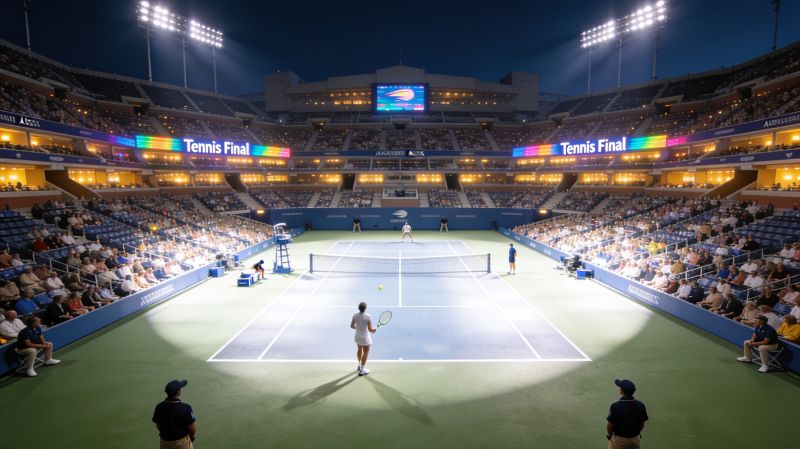
it is a global appointment shaped by television audiences, player recovery and the tournament’s demanding schedule.Recent finals have shown why the US Open Final Time can move from a routine listing to a major talking point. A rain interruption at Flushing Meadows can push a match deep into the evening。while a long semifinal may force officials to reconsider the next day’s order of play. Organizers generally try to protect finalists from an unusually short turnaround, yet the tournament must also balance stadium access, prime-time coverage and the practical limits of New York’s late-night noise rules. The published US Open Final Time therefore marks an expected start rather than a guarantee that the first ball will be struck at that exact minute. Fans who arrive early often see warm-ups, ceremonies and player introductions before competition begins. Those small delays are easy to overlook when planning a stream from another continent.For international audiences, converting the US Open Final Time requires more care than a quick internet search. New York follows Eastern Time, but the United Kingdom, continental Europe, Asia and Australia may be on different daylight-saving schedules when the tournament is held. A Sunday final scheduled for 2 p.m. in New York may begin in the evening in Europe and during the early hours of Monday in parts of Asia. A reliable calendar entry should include the date, location and time zone rather than displaying only a local clock reading. Broadcasters often publish the US Open Final Time in their own regional listings。and those listings may differ if coverage begins with studio analysis instead of the live match. Checking the official tournament schedule shortly before play remains the safest approach, especially when forecasts call for thunderstorms.The question of US Open Final Time also reflects the pressure surrounding the players. A prime-time slot can create a louder, more electric atmosphere, with celebrities filling the lower bowl and the Arthur Ashe Stadium crowd reacting to every change of momentum. It can also alter a competitor’s routine. Some players prefer an afternoon start because it follows a familiar warm-up pattern;
others welcome a later match。when temperatures fall and the court feels less punishing. The final’s timing affects meals, travel, media duties and sleep, details that become significant after two weeks of five-set battles and emotional matches. When a finalist says the schedule was “not ideal” that comment is rarely casual. The US Open Final Time can influence preparation as much as the surface, the draw or the opponent across the net.Viewers looking for the US Open Final Time should use the official US Open website。
the tournament’s mobile schedule and the local broadcaster’s live listing on match day. Search results can preserve an outdated time, particularly after a rain delay or a change to the daily order of play. Streaming platforms may also show a countdown that reflects coverage rather than the scheduled match start. The clearest routine is simple: confirm the New York time, convert it to the viewer’s location, and check again a few hours before the final. That habit prevents the most common mistake—arriving late for the opening set. Whether the championship is decided under bright afternoon light or beneath the lights of Ashe Stadium, the US Open Final Time remains the first fact fans need before the drama begins.