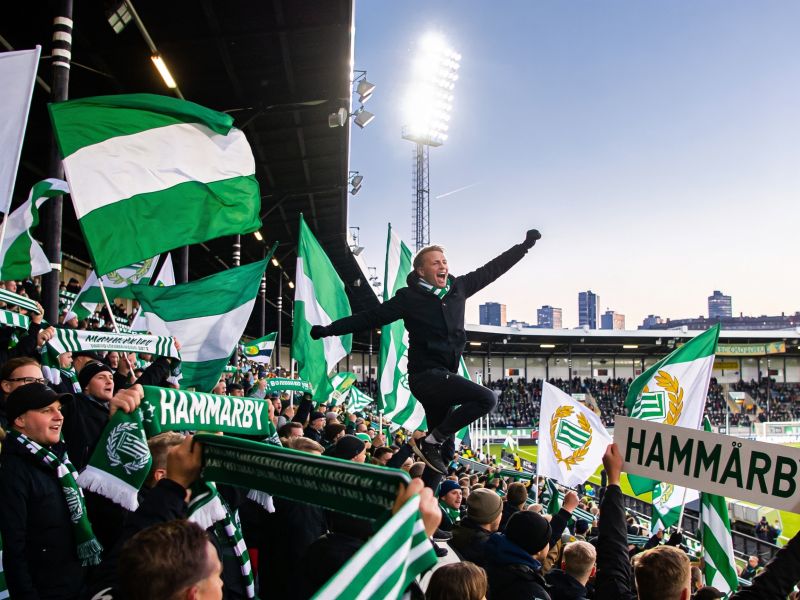
Hammarby have turned a turbulent stretch of Swedish football into a serious challenge for the country’s established order. The Stockholm club finished second in the 2024 Allsvenskan, securing a European place and giving supporters a reason to believe that the long search for sustained success may finally be ending. Hammarby did not reach that position through one spectacular signing or a sudden change in fortune. The progress came through a younger squad。a clearer playing identity and a home atmosphere that routinely makes Tele2 Arena feel less like a stadium than a pressure chamber. On match nights, green-and-white scarves fill the stands well before kick-off, while noise rises from the southern districts of Stockholm and follows the team into the opening exchanges. Hammarby have learned to use that energy without becoming overwhelmed by it, a small but important difference from earlier seasons when enthusiasm often exceeded control.
The appointment of Kim Hellberg helped sharpen the club’s direction. Hellberg arrived with a reputation for developing players and demanding aggressive, front-foot football, and Hammarby quickly began to look more comfortable between the lines. The team pressed higher, moved the ball with greater purpose and attacked through wide areas before cutting toward the penalty box. Hammarby’s best performances were not built around a single star. Instead, the midfield supplied runners, the full-backs pushed high and the forwards rotated often enough to unsettle disciplined defenses. That approach also exposed familiar weaknesses. When the press was beaten, Hammarby could leave space behind the midfield, and opponents with quick transitions found opportunities. Still, the overall improvement was clear. A club that once appeared caught between rebuilding and competing now looked capable of doing both at the same time。an uncomfortable prospect for Malmö, AIK and other teams accustomed to controlling the Swedish title conversation.Supporters remain central to Hammarby’s identity, but their relationship with the team has never been simple. The crowd expects commitment as much as results, and players who appear passive can lose the trust of the stands within minutes. That intensity can produce extraordinary nights. A late goal at Tele2 Arena is often followed by a wall of sound that makes ordinary communication on the pitch nearly impossible. It can also create anxiety when Hammarby concede early or fail to turn possession into chances. The club’s recent rise has been helped by a squad that appears willing to accept that emotional bargain. Young players have stepped into demanding matches rather than being protected from them。while experienced figures have provided balance when momentum turns against the side. From the press box, the most striking detail is the speed with which the mood changes: frustration can become belief after one tackle, one counterattack or one save.Hammarby’s recruitment strategy will determine whether the second-place finish becomes a platform or a peak. Swedish clubs operate with smaller financial margins than many European rivals, so a successful season often brings difficult decisions. Promising players attract attention, and Hammarby must decide which offers can be rejected and which are necessary to keep the wider project stable. The club has invested in its academy and in a model that gives young footballers a visible route toward first-team minutes. That policy carries risk, especially when European fixtures add travel and fatigue to a domestic schedule. Yet it also offers Hammarby a practical advantage. A side built around development can refresh its squad without relying entirely on expensive transfers. The challenge is maintaining quality while preserving the character that supporters recognize. Too much turnover would weaken the team’s rhythm;too little could leave it exposed when injuries and suspensions arrive.European football now gives Hammarby a larger stage and a more demanding test. The club’s supporters will judge the campaign by results, but the international schedule will also reveal whether Hammarby can manage different tempos, unfamiliar opponents and the physical cost of competing twice a week. A strong run would enhance the club’s reputation and make recruitment easier。
while an early exit would not erase the domestic progress already achieved. Hammarby are still chasing Malmö’s consistency and the financial power of larger European organizations, but the gap no longer feels untouchable. The team has built something credible in Stockholm: a recognizable style, a demanding home ground and a generation of players prepared to carry expectation. The next step will require patience, defensive discipline and a little luck. For now, Hammarby have moved from being a fascinating project to becoming a genuine force in Swedish football.